
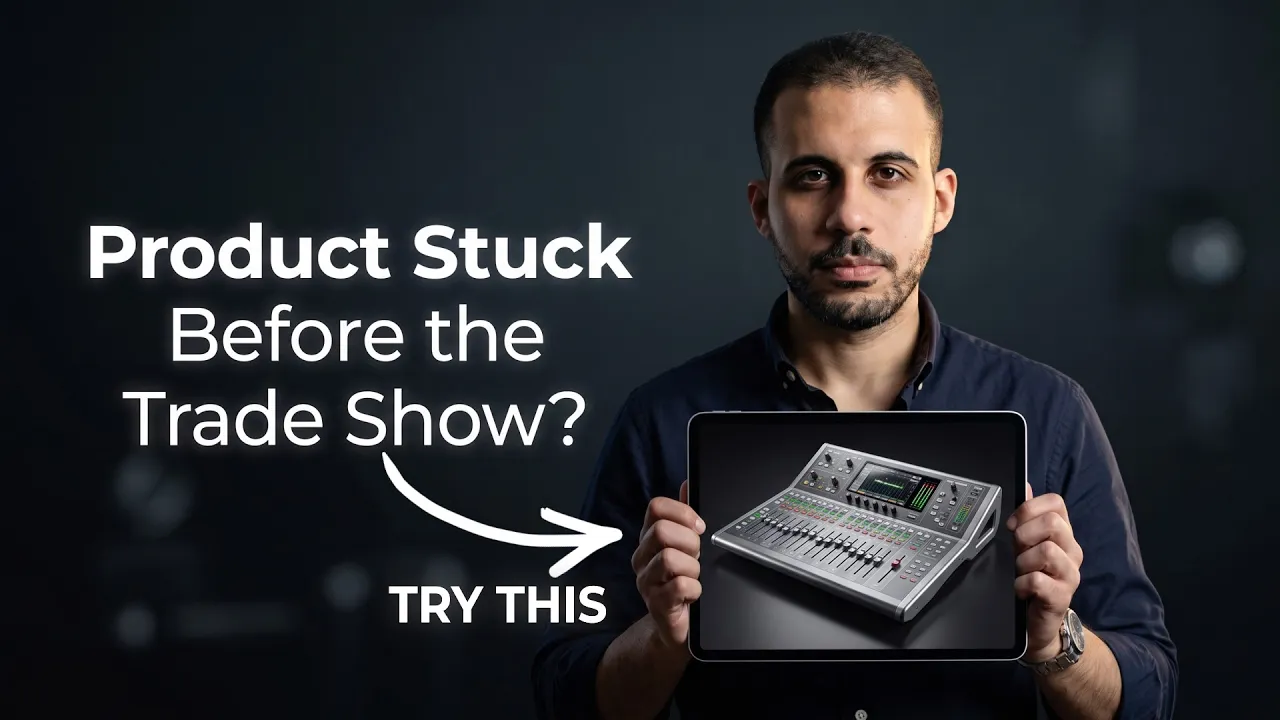
You spent more than $150,000 or more on an exhibition footprint, but the engineering team just called. The product is delayed. Most heavy industry marketing managers and CMOs panic in this exact scenario.
So in this case, shipping a 5-ton machine to a convention center is not a strategy; it is a massive logistical expense. Even if the hardware arrives completely on time, it simply sits there as a static metal box on the floor. Passersby can’t look through the solid casing to see your internal engineering innovations, and your sales team cannot effectively explain complex mechanical workflows on a chaotic, sensory-overloaded trade show floor. Industry leaders are aggressively abandoning this archaic, high-risk approach. Instead of anchoring your revenue to physical freight, we replace the static hardware with a cinematic visual asset ecosystem.
What is the B2B Trade Show?
B2B Trade Shows are high-stakes, capital-intensive marketing environments designed to aggregate dense populations of institutional buyers, engineers, and procurement committees
For heavy industrial, medical device, and automation sectors, these multi-day exhibitions serve as a critical midpoint to accelerate lengthy, complex enterprise sales cycles
Rather than relying on passive attendance, modern B2B trade shows require a highly synchronized marketing framework. Winning on the floor means transforming a rented physical space into an active outbound deployment center. Marketers utilize these events to execute account-based strategies, pull pre-vetted executives into private meeting rooms, and leverage high-fidelity digital assets to prove technical efficacy directly to buying committees.
How to Save Shipping Expenses at Trade Shows?
To slash heavy trade show shipping expenses, you must replace physical machinery logistics with high-end 3D visual asset ecosystems
By deploying hyperrealistic digital twins, CAD animations, and interactive iPad breakdowns, heavy industry brands completely bypass weight-based drayage fees while maximizing on-site pipeline velocity
By leveraging an engineering-to-visual pipeline, your industrial marketing team gains absolute operational immunity from supply chain disruptions, product delays, and freight overruns.
The Three-Phase Visual Deployment Framework
1- The Visual Anchor (Pre-Show & Booth Attraction): Treat your complex hardware with the exact same visual prestige as an Apple product launch. Apply advanced motion design, Rembrandt lighting, and hyperrealistic textures to visually explode your machine in midair. Displaying this on massive, high-contrast LED screens stops foot traffic instantly, wordlessly cutting through the ambient noise of the exhibition hall.
2- The Digital Sales Engineer (In-Booth Technical Sales): Once a serious prospect is engaged, your sales team steps in. Instead of pointing vaguely at a static piece of metal or handing out a printed brochure that gets thrown in the trash, they deploy interactive iPads loaded with pre-rendered video breakdowns. This allows your reps to x-ray through the heavy casing, revealing the precise technical innovations your competitors are actively hiding.
The Post-Show Follow-Up Engine (Pipeline Conversion): Long after the doors close, these modular visual assets are repurposed into highly segmented, persona-specific email follow-ups. Your pipeline velocity accelerates because your sales team can continuously deliver a flawless, high-fidelity pitch directly to the remaining enterprise buying committee.
How to Launch a B2B Product?
Launching a B2B product requires engineering a synchronized demand generation campaign that turns your product’s technical specifications into an ROI-focused business outcome
It mandates driving pre-show account-based outreach, maximizing on-site interactive engagement, and executing rapid post-show digital follow-ups
Whether your industrial machine is currently stuck on a cargo ship or still exists solely as an unrendered CAD file, your launch timeline does not have to stall.
The Omnichannel Product Launch Sequence
60 Days Pre-Show: Stop spraying and praying for random foot traffic. Deploy sub-30-second LinkedIn video teasers and personalized outreach templates to secure guaranteed, pre-scheduled VIP meetings with your top-tier target accounts before your team ever boards a plane.
On the Show Floor: Turn your exhibition footprint into a high-converting digital portal. Implement frictionless QR code loops—such as digital diagnostic scorecards or interactive engineering simulations—that instantly route high-intent leads straight to your CRM automation.
48 Hours Post-Show: Send automated, high-retention video breakdowns directly to your captured leads before data degradation sets in, converting raw booth traffic into closed-won revenue.
Deploying a synchronized visual ecosystem ensures your next major product launch achieves massive market authority and pipeline velocity. Stop paying thousands in hidden agency coordination taxes and freight markups just to move a static metal box.
How to Know If Your Booth Visuals Are Good for the Trade Show?
You Take a simple assessment called “Booth Readiness Score”. Answer 15 Questions to evaluate your current booth and get instant tailor made results and recommendations on optimizing your booth visuals
You Take a simple assessment called “Booth Readiness Score”. Answer 15 Questions to evaluate your current booth and get instant tailor made results and recommendations on optimizing your booth visuals
And If you would like to make your next Trade Show video, feel free to schedule a Visual Strategy Session
Or contact us by email